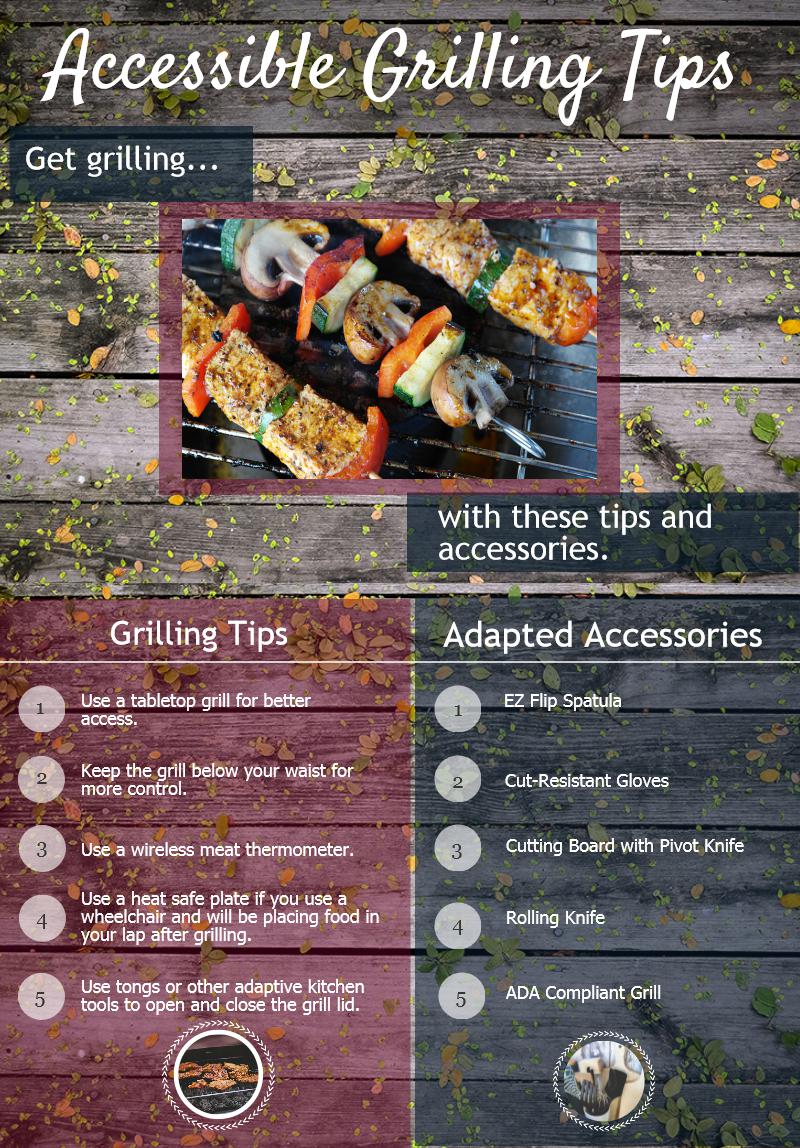
Grilling can be more than just a way to prepare a meal. For many people, it can be an opportunity to spend time with family and friends, participate in social gatherings, and enjoy the outdoors. Making grilling accessible helps ensure that people with disabilities have the opportunity to be active participants in these experiences rather than being limited to watching others cook.
Accessibility does not necessarily mean purchasing specialized equipment. Small changes to the grilling environment, tools, and cooking process can make a meaningful difference. Consider the height and location of the grill, the amount of space available to move around it, and whether frequently used ingredients and utensils are within easy reach. Choosing tools with larger or easier-to-grip handles, using a wireless meat thermometer, or positioning food preparation surfaces at a comfortable height can provide greater independence and control.
Grilling Doesn’t Have to Be Outdoors
When most people think about grilling, they picture a traditional outdoor grill in a backyard or on a patio. However, accessible grilling can take many forms. Tabletop electric grills, indoor grills, and other small cooking appliances can provide an alternative for people who do not have access to an accessible outdoor grilling area. These options can also be useful when weather, mobility, transportation, or other circumstances make outdoor grilling difficult.
Indoor and tabletop options can provide greater control over the cooking environment and may allow someone to prepare a grilled meal from a seated position. Depending on the equipment and the individual’s needs, these alternatives can make grilling a more flexible activity that can be enjoyed throughout the year rather than only during warm-weather months.
When grilling indoors, always follow the manufacturer’s instructions and safety recommendations for the appliance being used. Traditional charcoal and propane grills should never be used indoors because of the risk of fire and carbon monoxide exposure.
Think Beyond the Grill
Creating an accessible grilling experience involves more than selecting the right grill. Consider the entire process, from gathering ingredients and preparing food to cooking, serving, and cleaning up. Having adequate space to maneuver, keeping frequently used items within reach, and organizing the cooking area so that tools are easy to locate can reduce unnecessary reaching and movement.
For people who use wheelchairs or have limited standing tolerance, a seated cooking position may provide greater comfort and control. A stable work surface at an appropriate height can also make food preparation easier. Adaptive kitchen tools, heat-resistant gloves, specialized cutting boards, and utensils with modified grips can further support participation.
Ultimately, accessible grilling is about finding the setup that works best for the individual. There is no single way to make grilling accessible, and the best approach may vary based on a person’s mobility, strength, reach, balance, and available space. With thoughtful planning and a willingness to adapt the cooking environment, grilling can become an enjoyable and inclusive activity for more people.
Grilling Tips
- User a table top grill for better access or accessible outdoor grill.
- Keep the grill lower than waist-level for more control.
- Use a wireless meat thermometer to determine proper cooking temperatures.
- Use a heat safe plate if you use a wheelchair and will be placing the food on your lap after grilling.
- Use tongs or other adaptive kitchen tools to open and close the grill lid.
Adapted Accessories